


Find Triple Ball: Match Triple
4.6113.00 Reviews
App Specs
- Version
- 2.0.1
- Updated On
- License
- Free
- Downloads
- 50,000+
- Developer
- BRAINWORKS PUBLISHING PTE. LTD.
- Categories
- Board
- Platform
- Android
Screenshots
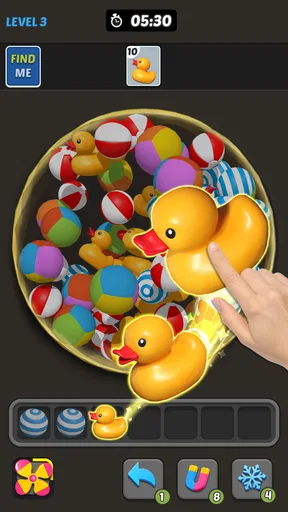
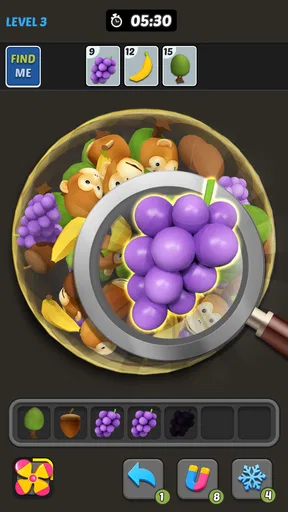
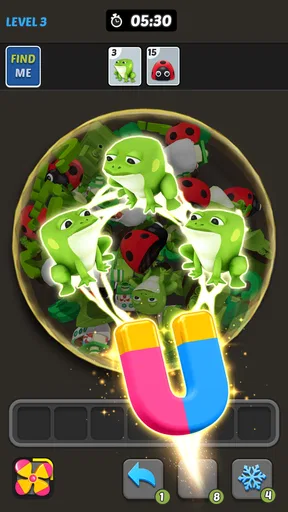


 Analysis by AppCompare
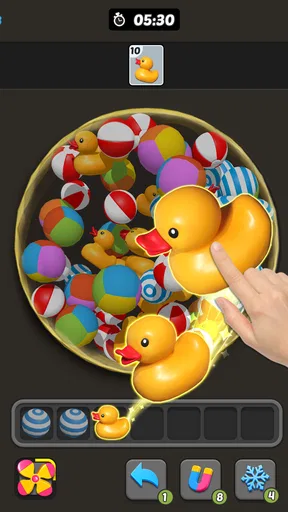
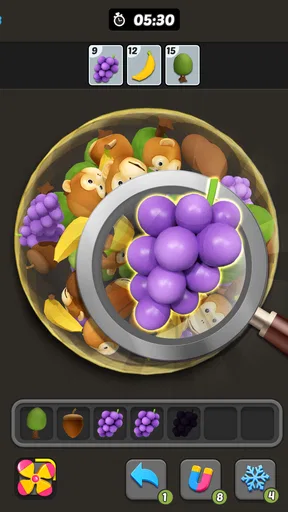
I started playing Find Triple Ball: Match Triple expecting a simple board game for a few spare minutes, and that is exactly where it fits best. The basic idea is easy to understand: look across a busy three-dimensional scene, select matching balls, and work toward groups of three. The appeal is not a complicated rule set. It is the small satisfaction of spotting a useful object, making the right selection, and watching the clutter become more manageable.
This is a free board game from BRAINWORKS PUBLISHING PTE. LTD. It is suitable for Everyone, runs on Android 8.0 or later, and its current version is 2.0.1. The game had reached more than 50 thousand installs when I reviewed it, with an average rating of 4.6 from 578 ratings and 113 written reviews. Those figures suggest that its straightforward format has found an audience, but they do not change the main question: does the matching loop stay enjoyable after the first few rounds?
My answer is yes, provided you want a relaxed object-finding game rather than a deep strategy board experience. Its strongest quality is the way each short decision leads naturally to another. Its weakest point is also connected to that simplicity: players looking for rich rules, competitive play, or a large sense of progression may find the experience light.
How the first move turns a crowded board into a clear task
The first action is deliberately uncomplicated. I scan the scene for three balls that belong together, tap them, and let the game show the result. That low entry barrier matters because there is no long tutorial to study before the puzzle becomes understandable. Within moments, I know what I am looking for and what a successful choice should accomplish.
The three-dimensional presentation gives the search a different feel from a flat tile-matching board. Objects can be partly hidden by the arrangement around them, so I am not merely reading rows and columns. I am checking the visible space, noticing colors and shapes, and deciding whether a tempting ball is actually useful now or better left untouched. Even when the rule is simple, the visual search creates enough friction to make each tap feel intentional.
I found it helpful to begin with the most exposed groups rather than immediately reaching for the first matching balls I noticed. Clearing an obvious set can reveal objects behind it and make the next decision easier. That creates a practical rhythm: inspect, choose a triple, clear it, then inspect the newly opened area. Rushing can leave the board in a less comfortable state, especially when several possible matches compete for attention.
This is one of the game’s more important design choices. A normal match-three game often presents a grid where the next move is visible at a glance. Here, the search itself is part of the challenge. The board asks me to look carefully before acting, which makes it suitable for a short mental break but less suitable for anyone who dislikes visual clutter or object-hunting tasks.
Worth Reading Before You Choose

EA SPORTS FC Mobile 26 Is a Bigger Football Game, but It Takes Time

Flipboard Shows What News Apps Must Do Beyond the Feed

Switching to Android Auto Means Rethinking Your Driving Routine

Google Calendar Makes a Crowded Week Easier to Manage

Ludo King Makes the Most of the Minutes Between Plans

Baby Panda World Brings Quick Play to Modern Phones, but Its Game Library Feels Busy
The first useful habit is to treat the board as a changing picture rather than a fixed list of targets. A ball that seems unimportant can become valuable after one nearby group disappears. I also try not to judge the whole position too quickly. The best move is often the triple that exposes more of the scene, not necessarily the one that is easiest to recognize.
Why the visual search feels calmer than a traditional match game
The pace is mostly controlled by the player. I can pause between selections, look again, and make a deliberate choice instead of reacting to a timer or a rapidly changing grid. That gives the game a more relaxed character than many arcade-style matching alternatives. The store summary describes it as a way to relax while having fun, and in practical use I can see why: the task is active enough to hold my attention without demanding constant speed.
That does not mean every moment is effortless. When similar objects are packed together, I need to adjust my view and remember which balls I have already considered. The challenge comes from attention and organization rather than from complex planning. For me, that is a good fit during a commute, while waiting for an appointment, or at the end of the day when I want something interactive but not demanding.
It is also a reasonable choice for players who are new to this kind of board puzzle. The central action is obvious, and the consequence of a correct selection is easy to read. Younger players can understand the matching goal, while adults may appreciate the quiet concentration. Because the age rating is Everyone, it is positioned as an accessible game rather than one aimed at a narrow audience.
The feedback rhythm: tap, clear, inspect, repeat
The game’s feedback loop is built around a satisfying sequence. I identify a triple, tap the balls, see them leave or resolve, and immediately receive a cleaner area to examine. That response is important because it gives every successful move a visible purpose. I am not matching objects only to increase an abstract score; I am also reducing the visual mess in front of me.
Good feedback in a puzzle game should answer three questions quickly: did my move work, what changed, and what should I consider next? This game’s basic structure handles those questions well. A completed group confirms the match, the cleared space changes the board, and the newly exposed objects suggest the next search. The result is a loop that rarely feels stalled during a productive run.
I especially like the reset in attention after each triple. Before a move, I may be focused on one small cluster. After it disappears, I have to widen my view and reassess. That prevents the game from becoming a completely automatic tapping exercise. The board keeps asking for another glance, and each glance can reveal a different opportunity.
There is a useful trade-off here. The feedback is immediate and easy to understand, but the game does not appear to rely on elaborate strategic layers to make the action meaningful. If you compare it with a classic board game, card battler, or competitive match-three title, the decision space is narrower. The pleasure comes from visual order and steady progress, not from building a long-term plan against another player.
For a better run, I recommend using a two-stage scan. First, look for triples that are completely visible. Second, inspect the spaces those matches are likely to open. This avoids spending too much time trying to solve hidden possibilities before the board has changed. It is a small adjustment, but it makes the search feel more controlled and reduces unnecessary taps.
Where mistakes become frustrating
The same visual density that makes the game distinctive can also create friction. When several balls look similar or overlap in a busy arrangement, I may need an extra moment to confirm that I am selecting the intended objects. That is not a deal-breaker, but it means the game rewards patience more than speed. Anyone who expects instant recognition and rapid combos may find the pace slower than expected.
Another limitation is that the core loop can become familiar. Once I understand the best general approach—clear visible triples, use the openings, and reassess—the surprise comes mainly from the arrangement of objects rather than from new rules. Players who need frequent mechanical changes may eventually prefer a more varied puzzle game.
For me, this is where expectations matter. I would not choose this title when I want a competitive challenge, a story, or a detailed progression system. I would choose it when I want a focused visual task that can be started quickly and stopped without losing the reason I was playing.
The reward is a cleaner board, not just a completed match
The most convincing reward is the transformation of the scene. A successful triple removes a small piece of disorder, and that visual improvement gives the next move a reason to exist. The reward is modest, but it arrives often. That frequent confirmation is what keeps the game from feeling like a single puzzle with a distant finish line.
I also enjoy the mental reward of recognition. Finding a match in a crowded three-dimensional arrangement feels different from matching icons that are already lined up for me. The game gives me a small moment of discovery, followed by a clear result. That combination is effective for short sessions because I do not need to wait several minutes before feeling that I have accomplished something.
The free price makes it easy to try without committing money at the start. There are in-app purchases ranging from $0.99 to $99.99 per item, so I would advise checking the purchase prompts carefully if you are handing the device to a child or trying to keep the experience completely free. The presence of optional purchases does not prevent me from enjoying the basic loop, but it is still part of the decision for anyone who prefers games with no spending pressure.
One practical use case is a short reset between demanding tasks. If I have ten minutes before a meeting, I can play a few rounds, concentrate on finding triples, and stop after a natural clearing point. The game does not require me to remember a story or maintain a complicated build. That makes it easier to return to than a longer strategy title, where a brief interruption can leave me unsure what I was doing.
It can also work as a gentle attention exercise. I have to compare objects, hold a few possibilities in mind, and update my plan after each clear. I would not describe it as a formal training tool, but it does encourage visual scanning and short-term organization. That is a more useful benefit than simply calling it relaxing: the relaxation comes from having one manageable task to focus on.
Who gets the most from the reward loop
I think the best audience is someone who enjoys hidden-object searching but wants a clearer objective than simply locating items. The triple requirement gives every discovery a purpose. It also suits players who like match games but want something less tied to a flat grid. The three-dimensional arrangement adds enough distinction to make the familiar matching idea feel fresh at first.
Families may appreciate the approachable rules and Everyone rating, although I would still supervise purchases on a shared device. Casual players can try it without paying because the game is free, while puzzle fans can use the board as a low-pressure way to warm up before more demanding games.
I would skip it if your priority is online competition, deep board-game tactics, or a strong narrative. I would also look elsewhere if visual searching feels tiring for you. In those cases, a traditional grid-based match game may be clearer, and a strategy board game will offer more meaningful long-term decisions. This title is strongest when its limited scope is a benefit rather than a disappointment.
Session reset: why one completed round leads to another
The reason I start another session is not that the rules suddenly become more complex. It is that the previous board leaves me with a simple unfinished curiosity: can I clear the next arrangement as smoothly? The reset creates a clean beginning, while the familiar triple-matching action means I can return immediately without relearning anything.
That makes the game well suited to fragmented play. I can open it for a quick attempt, stop when I need to, and come back later with the same basic understanding. This is different from games that build tension through a long campaign or require daily management. Here, the reset is part of the comfort. Each new board asks for attention, but not for a major commitment.
The downside is that the reset may feel too similar for players who want a strong sense of advancement. A new arrangement can provide a fresh search, yet the emotional shape of the session remains familiar: inspect, match, clear, and repeat. If you need unlockable systems, changing objectives, or a growing strategic toolkit to stay interested, the loop may not carry you for long.
I found that setting a personal stopping rule helps. Rather than playing indefinitely, I might stop after clearing a satisfying section or after one short break. This keeps the game in its strongest role as a compact relaxation tool. Without that boundary, the repeated search can become less rewarding, especially when I am playing out of habit rather than because I genuinely want another puzzle.
The current version, 2.0.1, is the version I would look for when installing, and the minimum Android requirement of 8.0 keeps it available to many older devices. I would still judge the experience on the particular phone or tablet being used, because a three-dimensional board is easier to inspect on a comfortable screen than on a very small display. That is not a reason to reject it, but screen comfort matters more here than it would in a simple text-based board game.
How it compares with familiar alternatives
Compared with standard match-three games, this one replaces the predictable grid with object hunting. That makes it less about planning a chain of swaps and more about recognizing groups in space. If you enjoy arranging tiles into lines, a classic grid game may offer more tactical depth. If you enjoy searching through a scene and then receiving the clean satisfaction of a completed set, this game has the more suitable structure.
Compared with hidden-object games, it has a firmer action cycle. You are not only locating a target; you are collecting a complete triple before the board can meaningfully change. That gives the search a stronger sense of direction. On the other hand, a dedicated hidden-object game may provide richer scenes, themed objectives, or a more developed narrative, so this is the better choice only when you prefer a compact matching goal.
Compared with classic board games, the title is much easier to enter but much lighter in strategic consequence. There is no need to learn a large rulebook or plan around an opponent. That is exactly why it works for casual use, but it also explains why serious board-game players may see it as a snack rather than a full meal.
The most useful way to choose is to ask what kind of concentration you want. Choose this game for visual sorting, quick feedback, and a calm repeatable loop. Choose a grid match game for combo planning, a hidden-object adventure for richer searching, or a traditional board game for deeper decisions and social competition.
My verdict on the complete action-feedback-reset loop
Find Triple Ball: Match Triple succeeds because it understands the value of a small, repeatable action. I look, select three matching balls, watch the board become clearer, and immediately receive a new search problem. The reward is visible, the reset is painless, and the next session begins for a believable reason rather than through forced complexity.
It is not a game I would recommend to someone seeking a demanding strategy experience. Its rules are intentionally narrow, its visual search can occasionally feel busy, and the repeated structure may lose its freshness over longer play. The in-app purchase range also means cautious players should pay attention before confirming any optional transaction.
For everyone else, especially people who want a free board game for short breaks, it is an easy recommendation. I like that it asks for attention without overwhelming me, and I appreciate that every successful triple changes the board in a useful way. BRAINWORKS PUBLISHING PTE. LTD. has kept the central idea approachable while adding enough three-dimensional searching to distinguish it from an ordinary match grid.
Install it if the thought of turning a crowded scene into tidy groups sounds satisfying. Start slowly, clear the most visible triples first, and use each opening to reassess the board. If that cycle feels good after a few sessions, the game has probably found its place on your device. If you are waiting for deeper rules or a more varied progression system, it is better to treat this as a relaxing side game rather than your main board-game destination.
Pros
- Simple tap controls make matches easy to learn.
- Short levels fit well into quick gaming sessions.
- Bright visuals make the triple-matching board easy to read.
- Increasing difficulty keeps later stages engaging.
- Offline play is convenient when no internet is available.
Cons
- Some levels may feel repetitive after extended play.
- Limited move options can make certain boards frustrating.
- Hints and boosters may be restricted or tied to ads.
- Frequent advertisements can interrupt the gameplay flow.
- Progression may feel slow without optional purchases.
FAQs for Find Triple Ball: Match Triple
What is Find Triple Ball: Match Triple and how is it played?
Find Triple Ball: Match Triple is a casual puzzle game based on sorting and matching identical objects. Your main goal is to find three matching balls or items and place them together to clear them from the board. Each level becomes more challenging as the layout gets busier, so careful observation, planning, and quick decisions are important for completing stages successfully.
Is Find Triple Ball: Match Triple suitable for beginners?
Yes. The game is designed to be easy to understand, even if you have never played a triple-matching puzzle before. The early levels generally introduce the basic mechanics gradually, allowing you to learn how to identify matching objects and manage the available spaces. As you progress, the puzzles require more strategic thinking and become better suited to players who enjoy increasingly difficult challenges.
Can Find Triple Ball: Match Triple be played without an internet connection?
Many casual matching games can be played offline, which makes them convenient for short sessions while traveling or when mobile data is unavailable. However, certain features may still require an internet connection, including advertisements, online rewards, event content, updates, or synchronization. Before relying on offline play, it is worth testing the game after disabling Wi-Fi and mobile data on your device.
Does Find Triple Ball: Match Triple contain advertisements or in-app purchases?
The game may include advertising and optional purchases, as is common with free-to-download puzzle titles. Ads can appear between levels or when you choose to receive extra rewards, hints, or additional chances. In-app purchases may provide benefits such as removing advertisements, obtaining boosters, or progressing more quickly. Check the store listing and your device’s purchase settings before downloading, especially if children use the device.
What should I know about the difficulty, boosters, and progress system?
Find Triple Ball: Match Triple starts with straightforward boards but can become more demanding as additional objects, limited spaces, and tighter moves are introduced. Depending on the version, boosters or hints may help reveal matches, undo actions, or recover from difficult situations. Use these tools thoughtfully rather than immediately, because saving them for complicated levels can make your progress more consistent and reduce the need for optional purchases.


